Use model references, listed dimensions and colour photographs to prepare a clear eyewear enquiry. Bring the design direction and commercial requirements together before discussing samples.
Six details that make an enquiry actionable.
01 / COLLECTION
Choose a starting point.
Tell us whether you need optical eyeglass frames, sunglasses or magnetic clip-on eyewear. Include model references, preferred frame shapes and your target market. For an original design, share a sketch or reference and explain which details matter.
Identify Premium Acetate, Mixed Up or Metal, then refer to the material listed for your chosen model. Titanium collections are planned. Send the catalogue colour name and photograph; for a custom colour, include a physical reference or colour standard for discussion.
Mark the position of a bevel, high-gloss carved detail, bicolor hinge or patterned temple core on a reference image. Describe the desired appearance and which parts may change. These are options to discuss, not features available on every model.
Provide logo artwork, preferred size and placement on the temple, lens or case. Include packaging references, labels and any required markings. Branding method, placement and packaging scope need agreement for the selected frame.
List planned units per model and colour, sample quantities, delivery destination and your target date. Distinguish a sample deadline from the required delivery date. Ask for current stock, minimum order quantities and a project-specific timetable.
Specify whether you need frames only, demonstration lenses, sun lenses or a matching clip. State any tint, lens performance, labelling or destination-market documentation required. Availability and supporting evidence must be confirmed for the exact product.
Compare shapes and sizes that address your target customers and existing assortment. Fit needs sample review, not just a frame-size number.
Signature & colour direction
Identify the silhouette or detail that expresses your brand. Balance familiar colours with accents across the collection instead of choosing each frame in isolation.
A practical addition
Consider a matching sun clip only where it answers a real customer need. Confirm model compatibility and lens specifications.
Confirm the model, material, construction, quantity, lenses, logo, packaging, trade terms, payment terms, timing and quotation validity. Agree sample approval criteria and the updates needed for your project.
Eyewear manufacturing processes
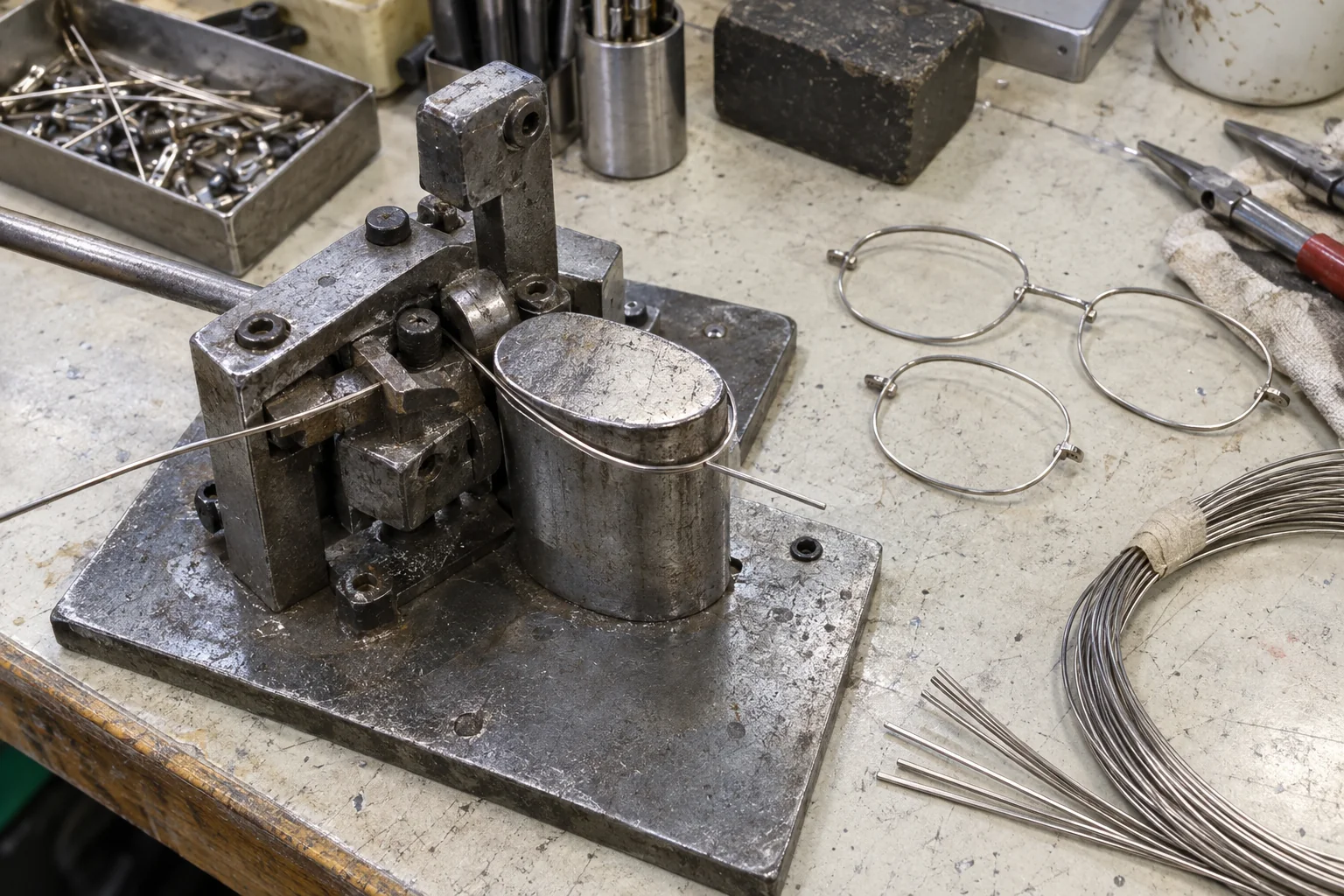
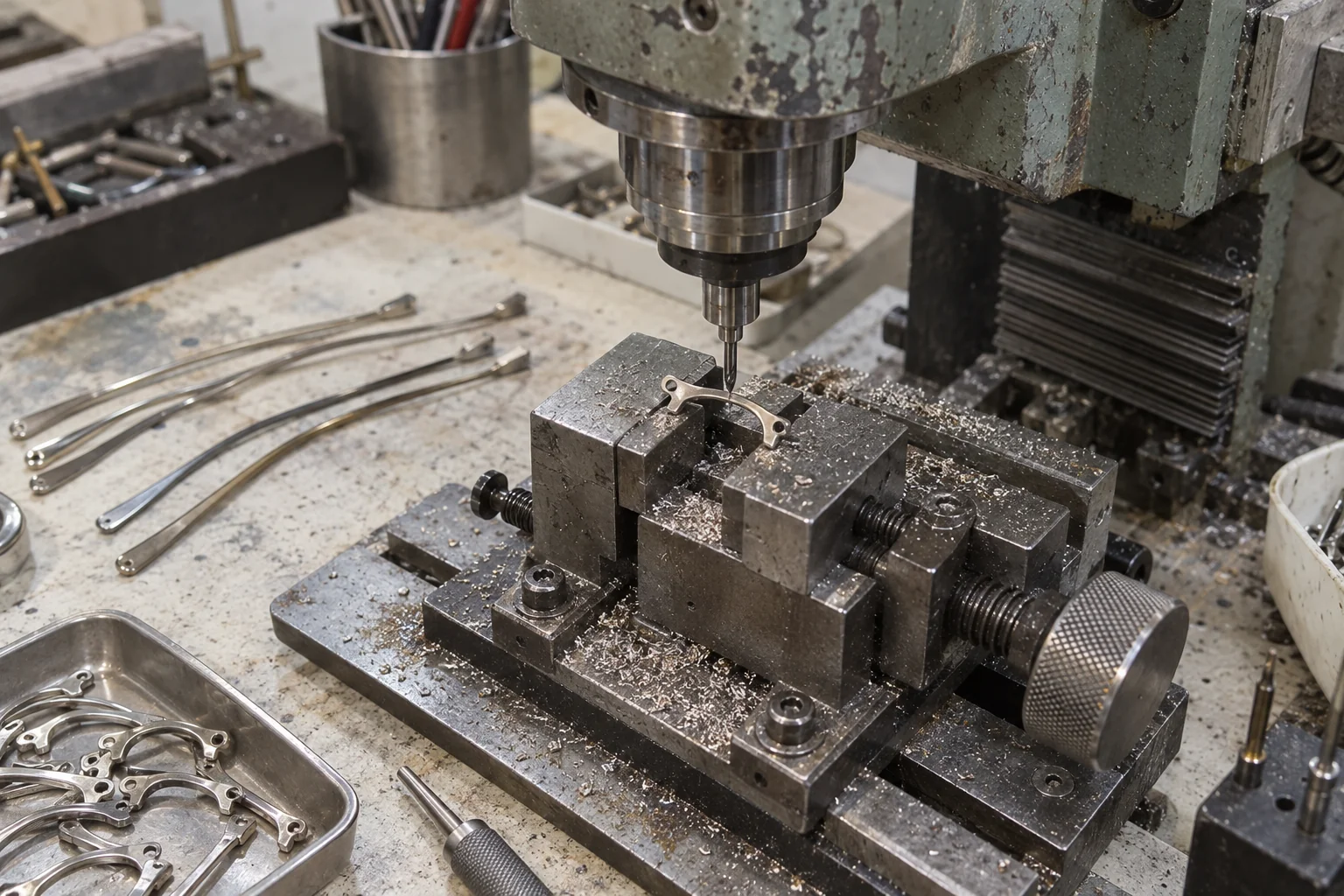
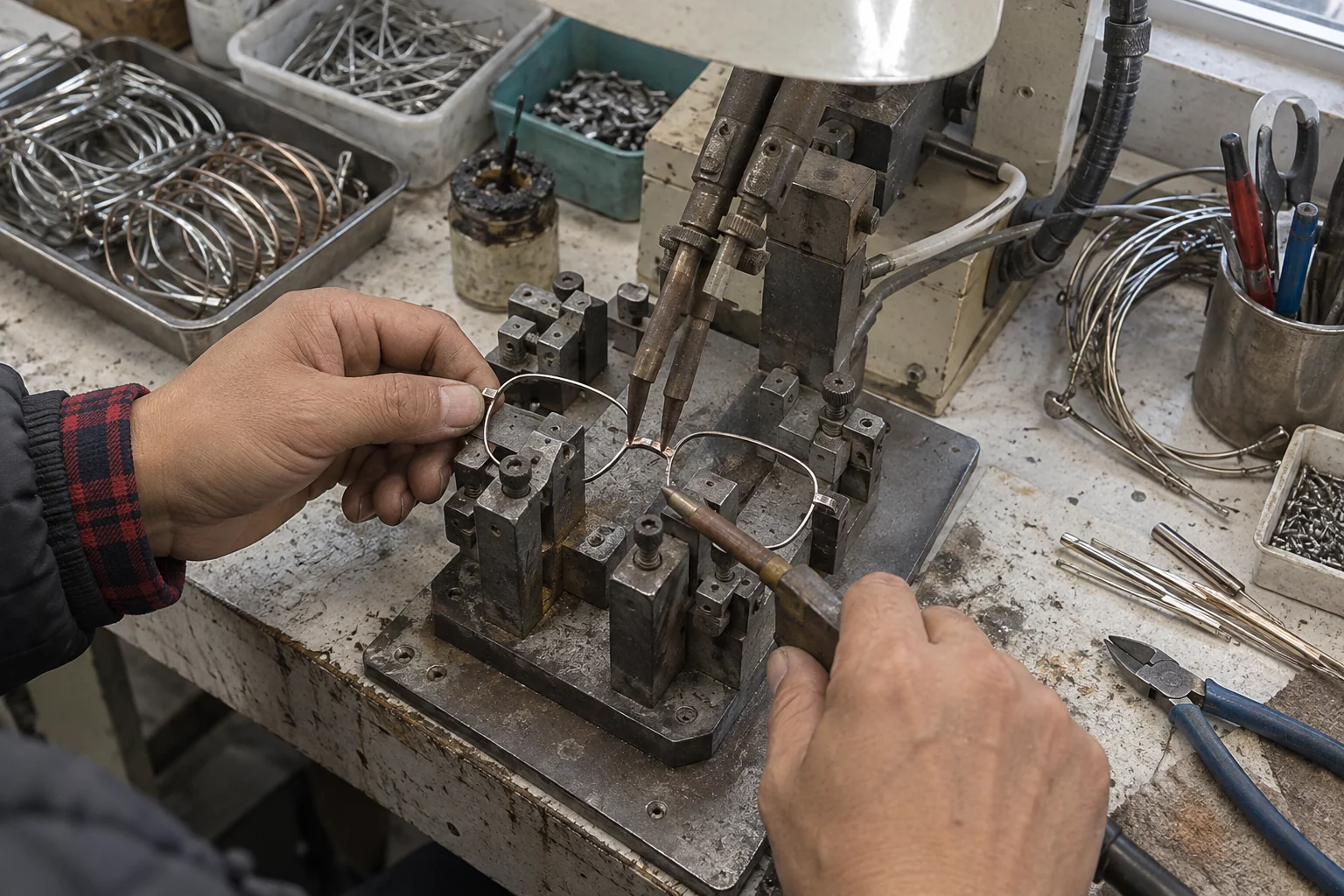
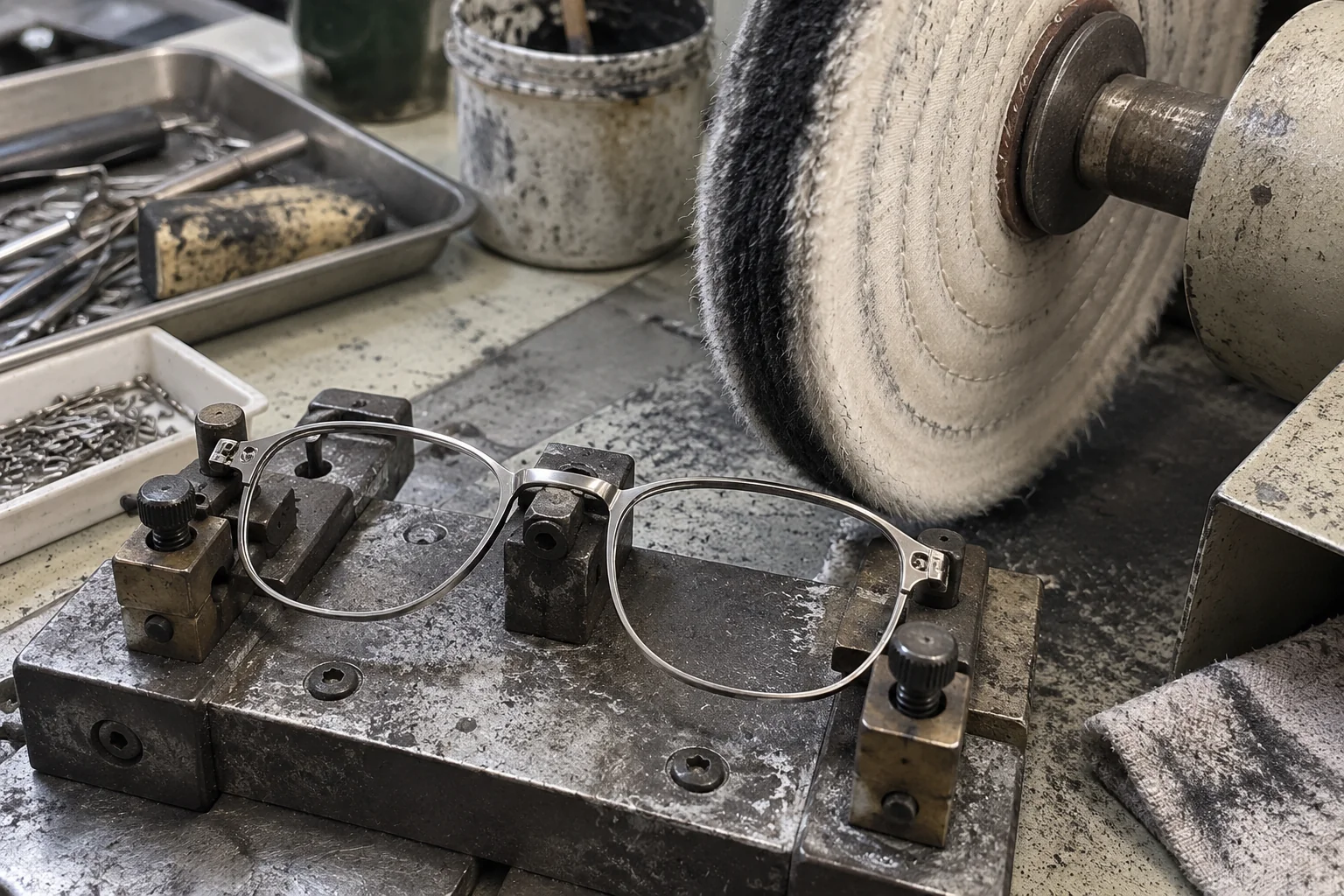
Explore the main stages used in acetate and metal eyewear construction. Each stage pairs a process description with a quality focus and a supporting image. Images include generated illustrations and supplied process photographs; they are process references, not a Smartreach factory record. The sequence and operations vary by model, material and agreed specification.
PROCESS OVERVIEW
Acetate frame process
Sheet preparation, machining, temple construction and finishing.
01
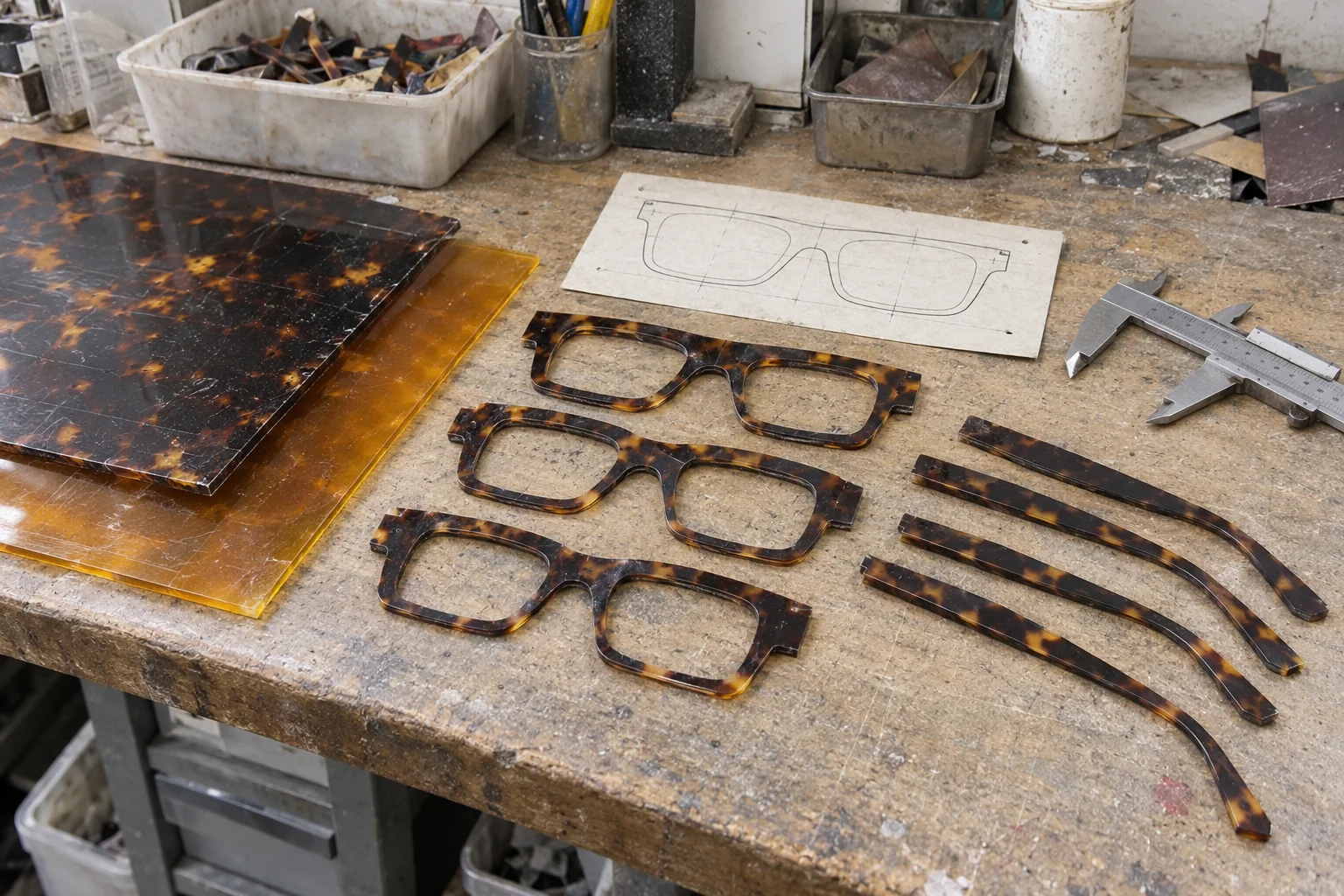
Material preparation
Acetate sheets are selected and cut into blanks for the front and temples.
Quality focus
Colour, pattern direction and the required component thickness are reference points for the selected design.
02
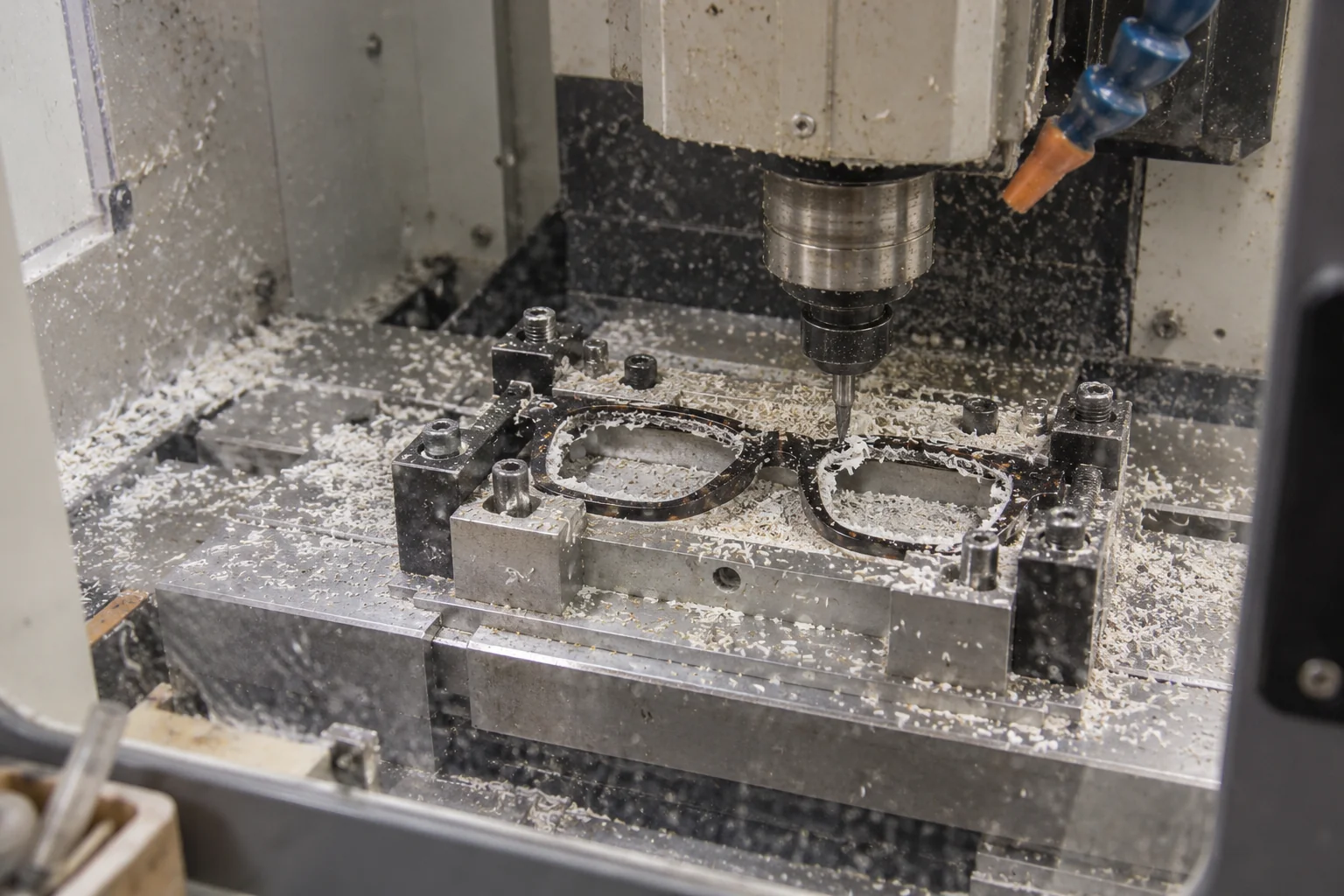
CNC machining & shaping
The front outline, lens openings and grooves are machined to the design.
Quality focus
Hand refinement smooths tool transitions; front curvature is formed as required by the frame.
03
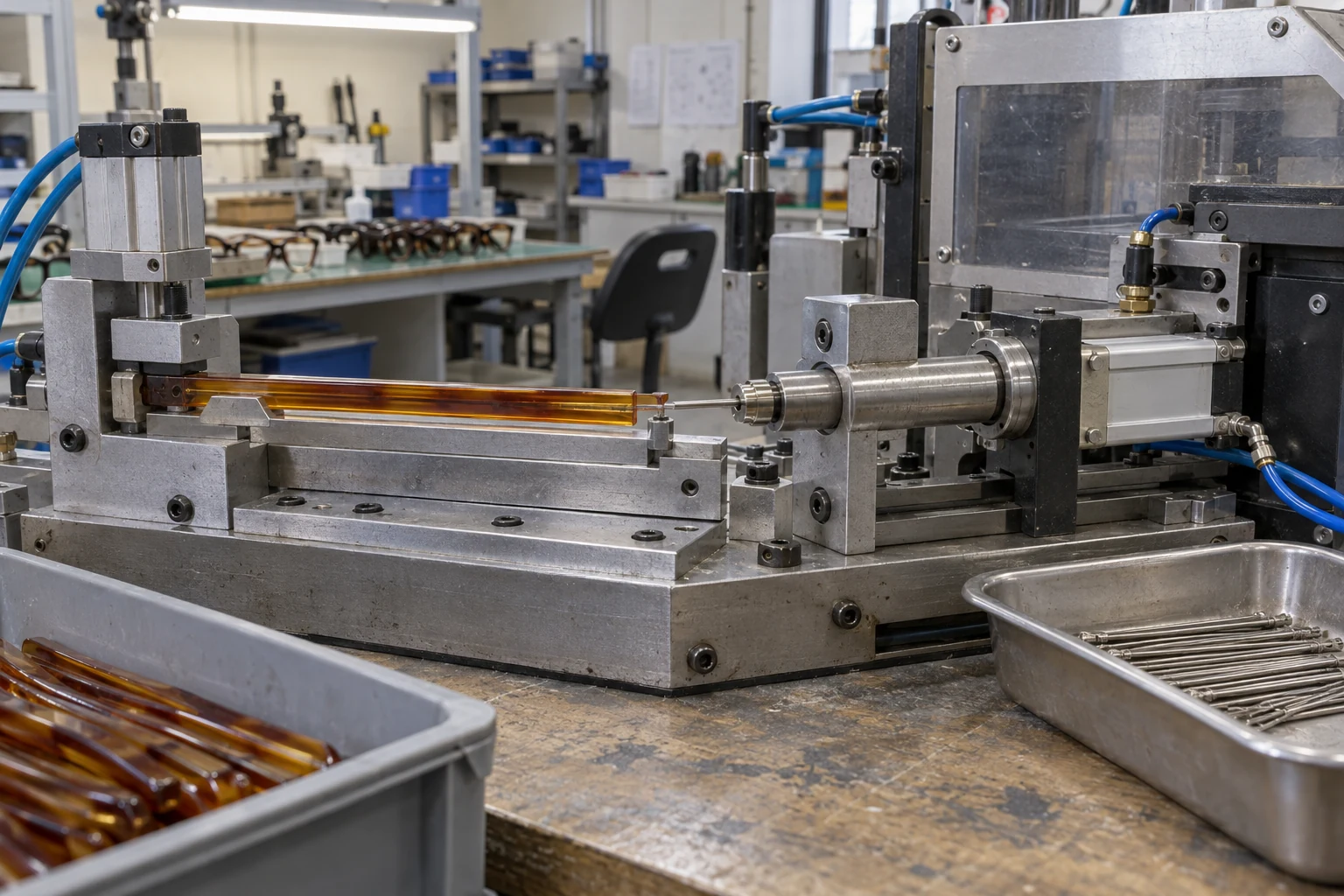
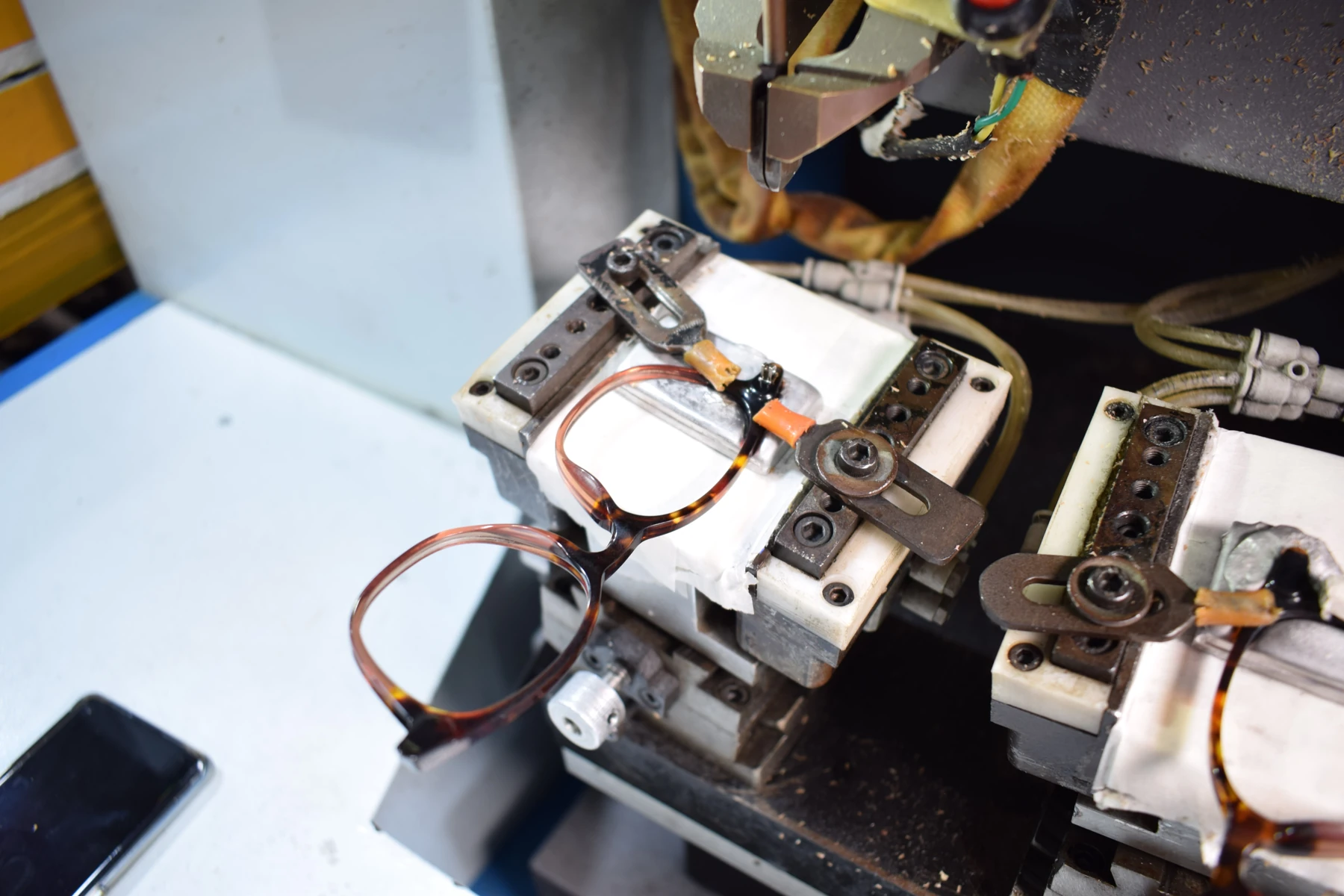
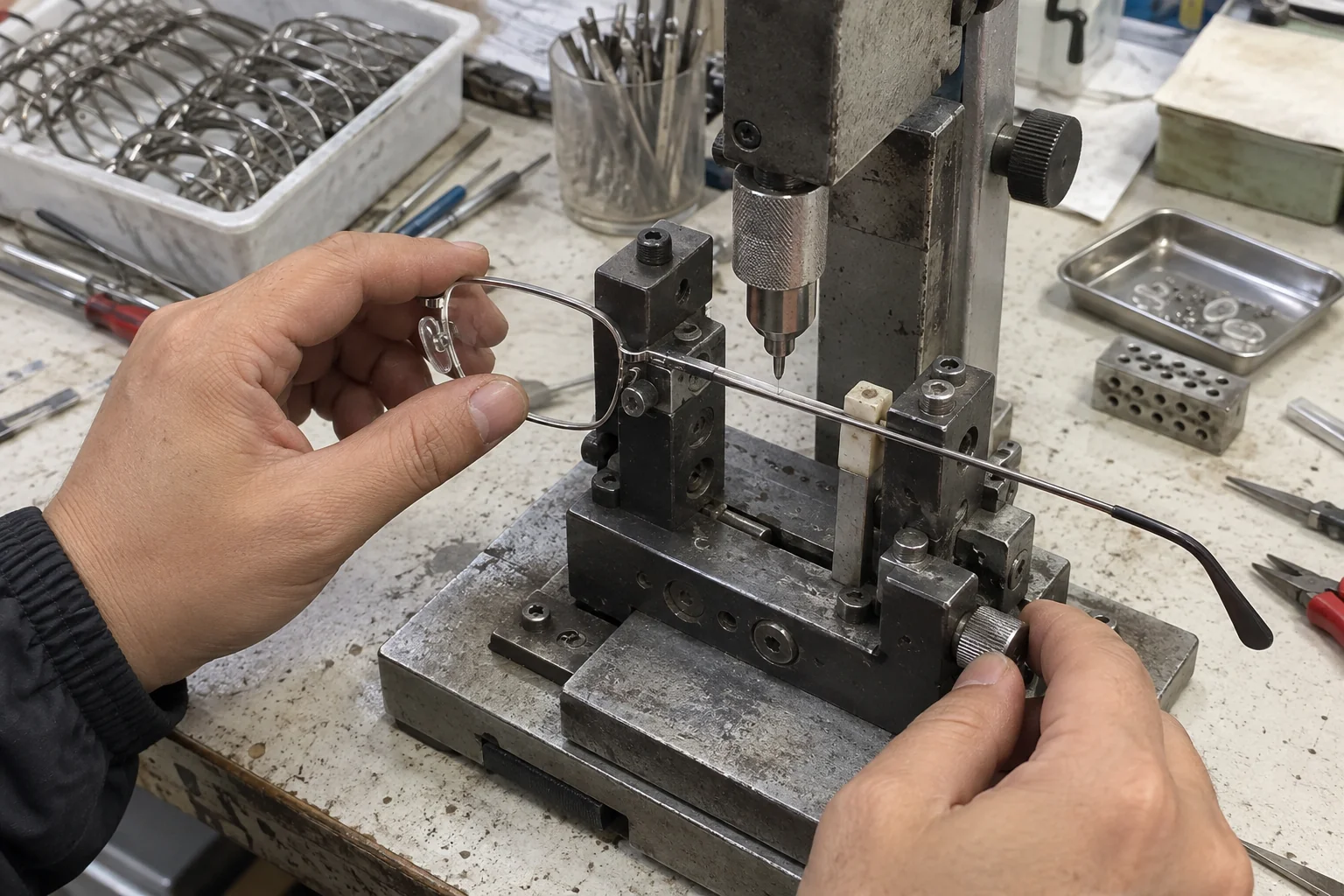
Temples & core insertion
Temples are shaped, then held in a fixture while a machine inserts the reinforcing core where specified.
Quality focus
Patterned cores, carved contours and decorative inserts depend on the individual construction.
04
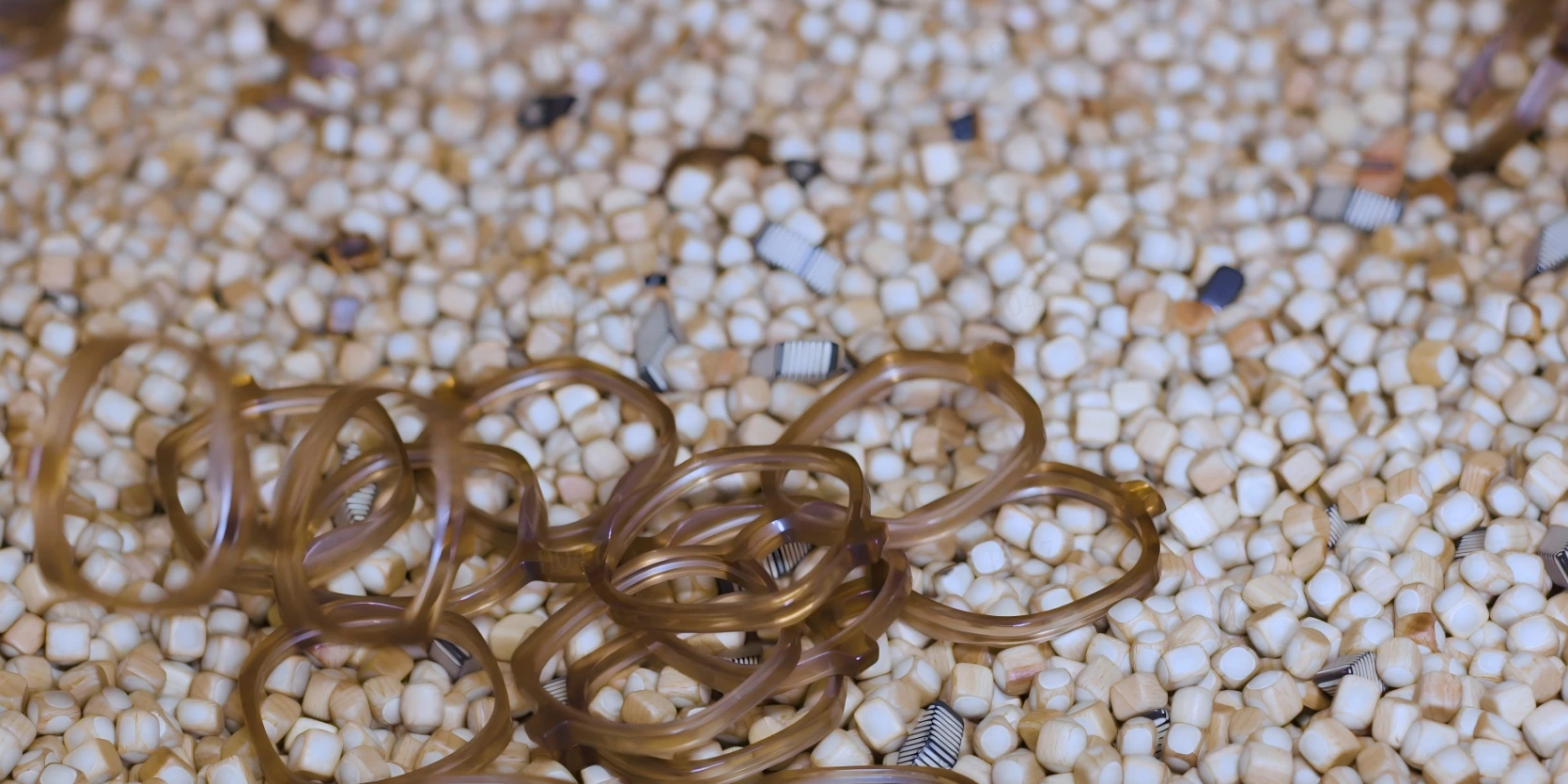
Tumbling
Progressive tumbling stages refine the surface before further finishing.
Quality focus
The media and processing route depend on the material, component and intended finish.
05
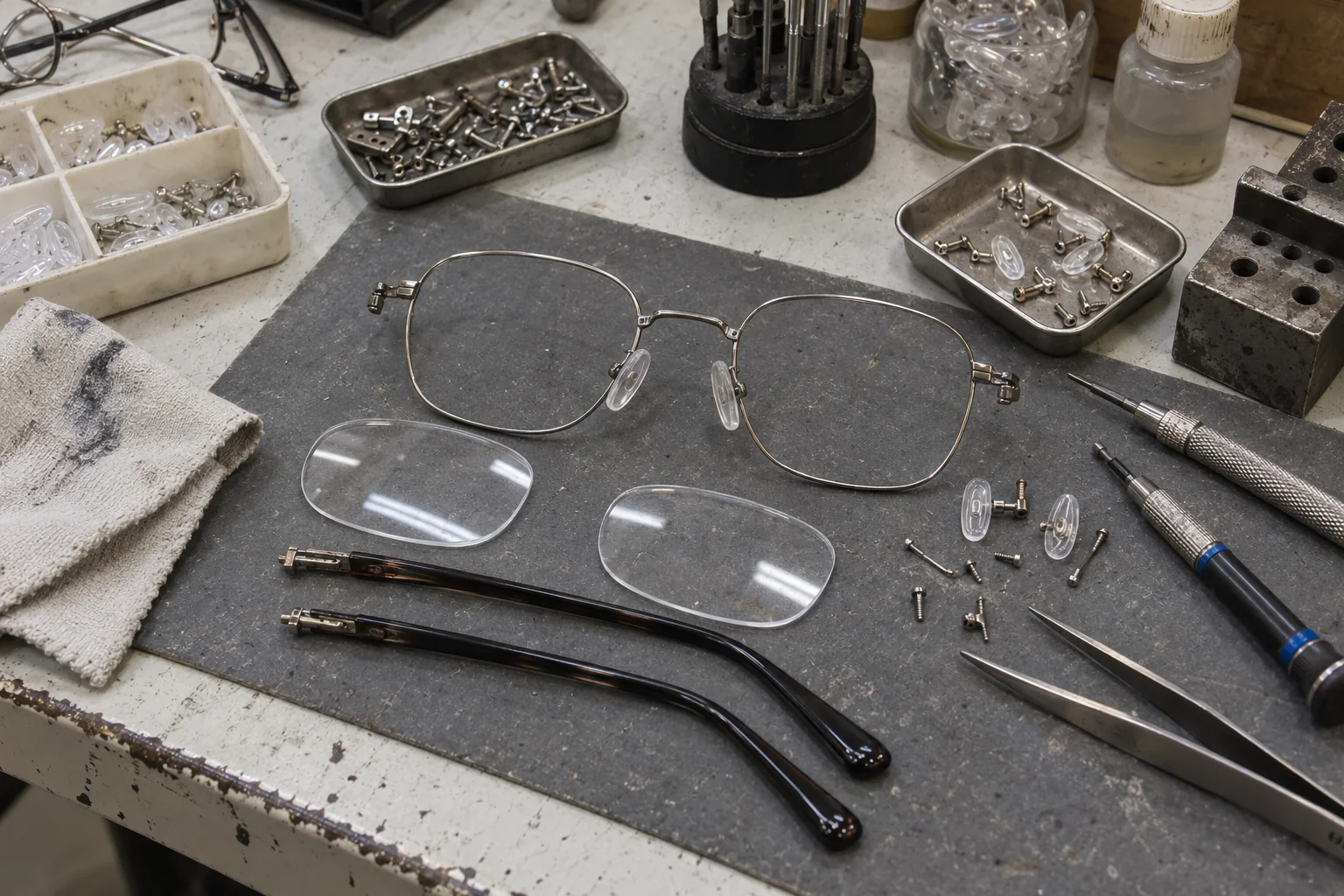
Hinge fitting & assembly
Hinges are fitted and the front and temples are brought together.
Quality focus
Connection areas, screw fit and opening movement are important review points.
06
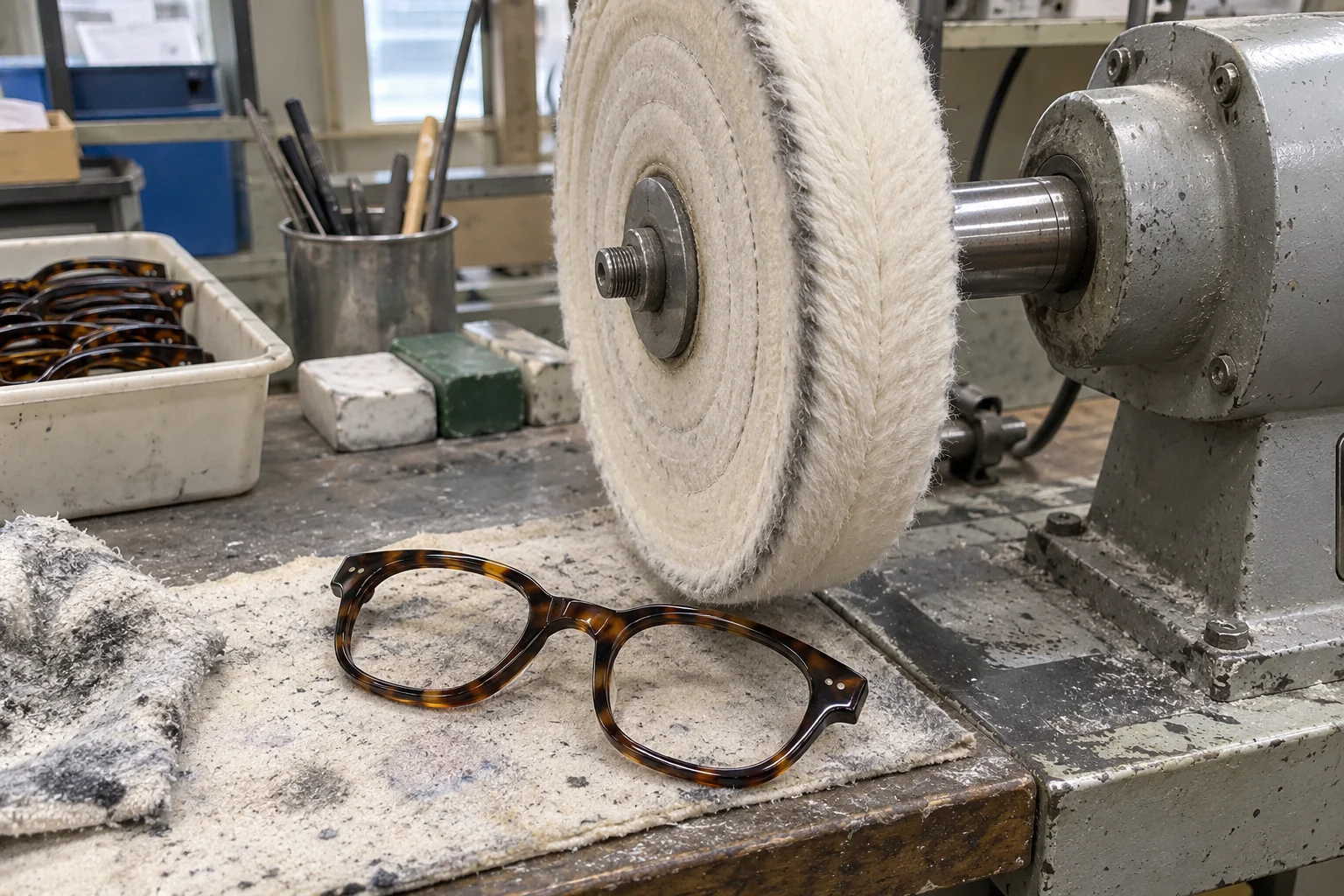
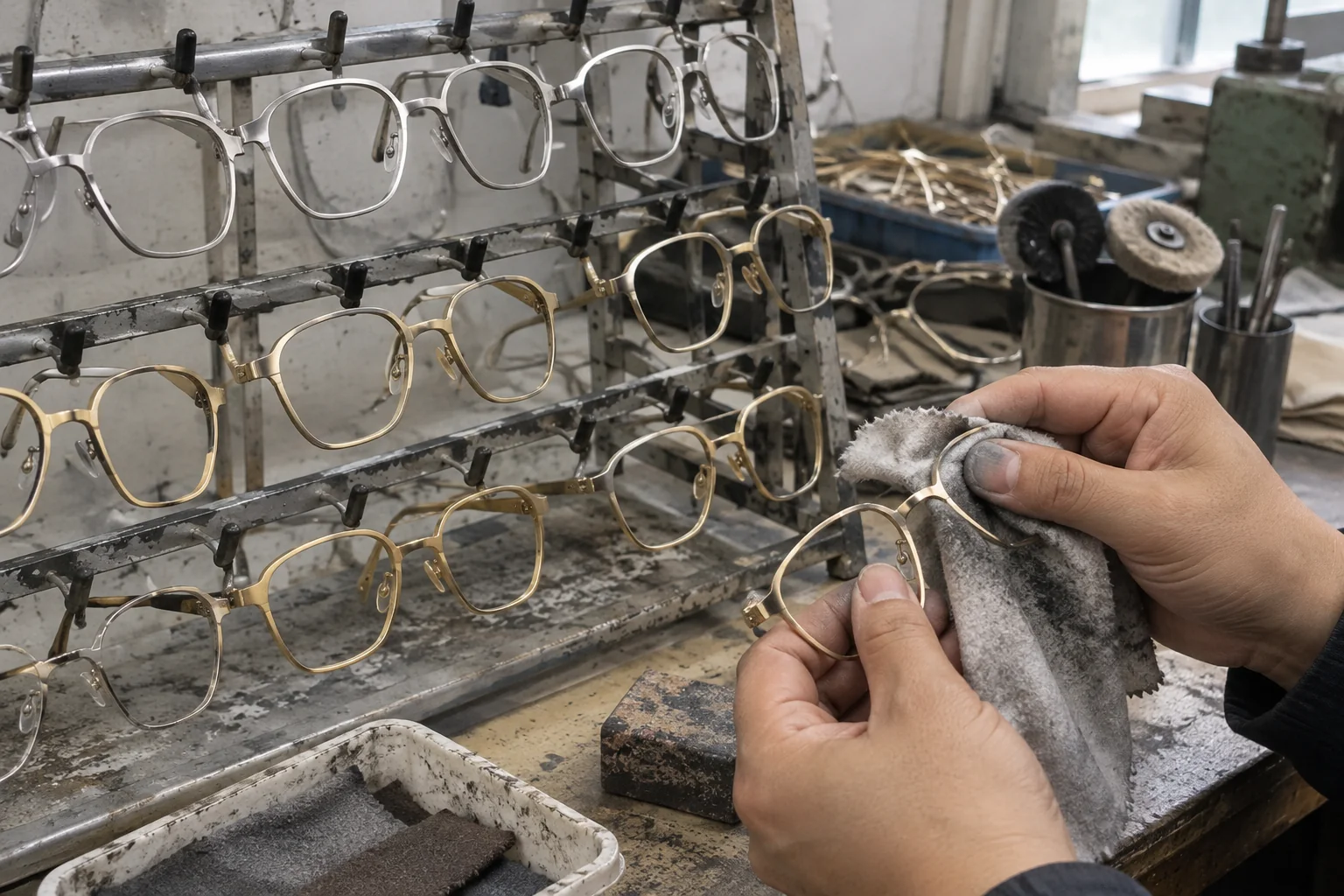
Polishing & cleaning
Fronts, temples and connection areas are polished and cleaned.
Quality focus
Edge definition and gloss should be compared with the agreed finish reference.
07
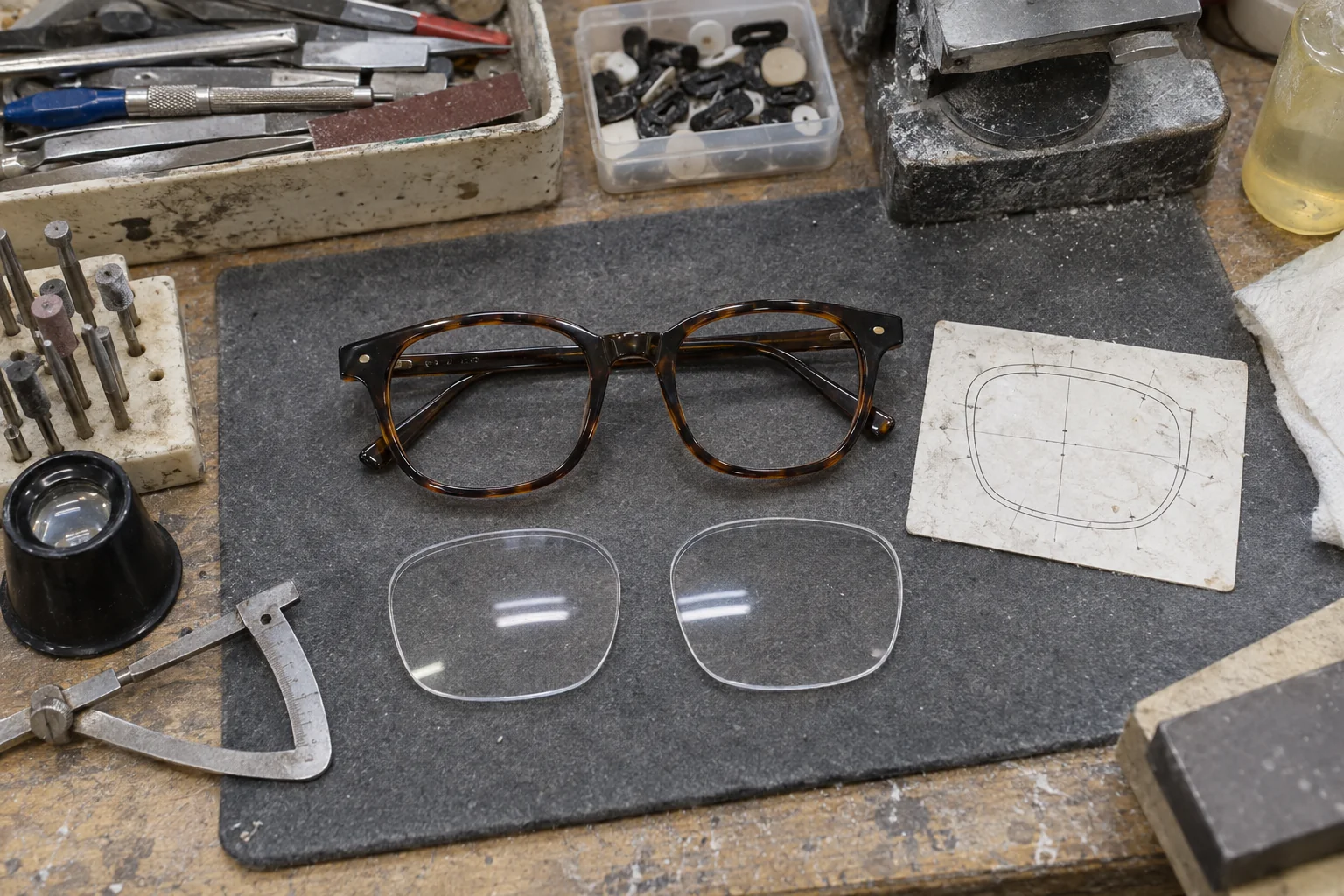
Lens fitting & marking
Specified lenses are cut and fitted; markings are applied to the agreed layout.
Quality focus
Lens requirements and branding locations are separate items in the product specification.
08
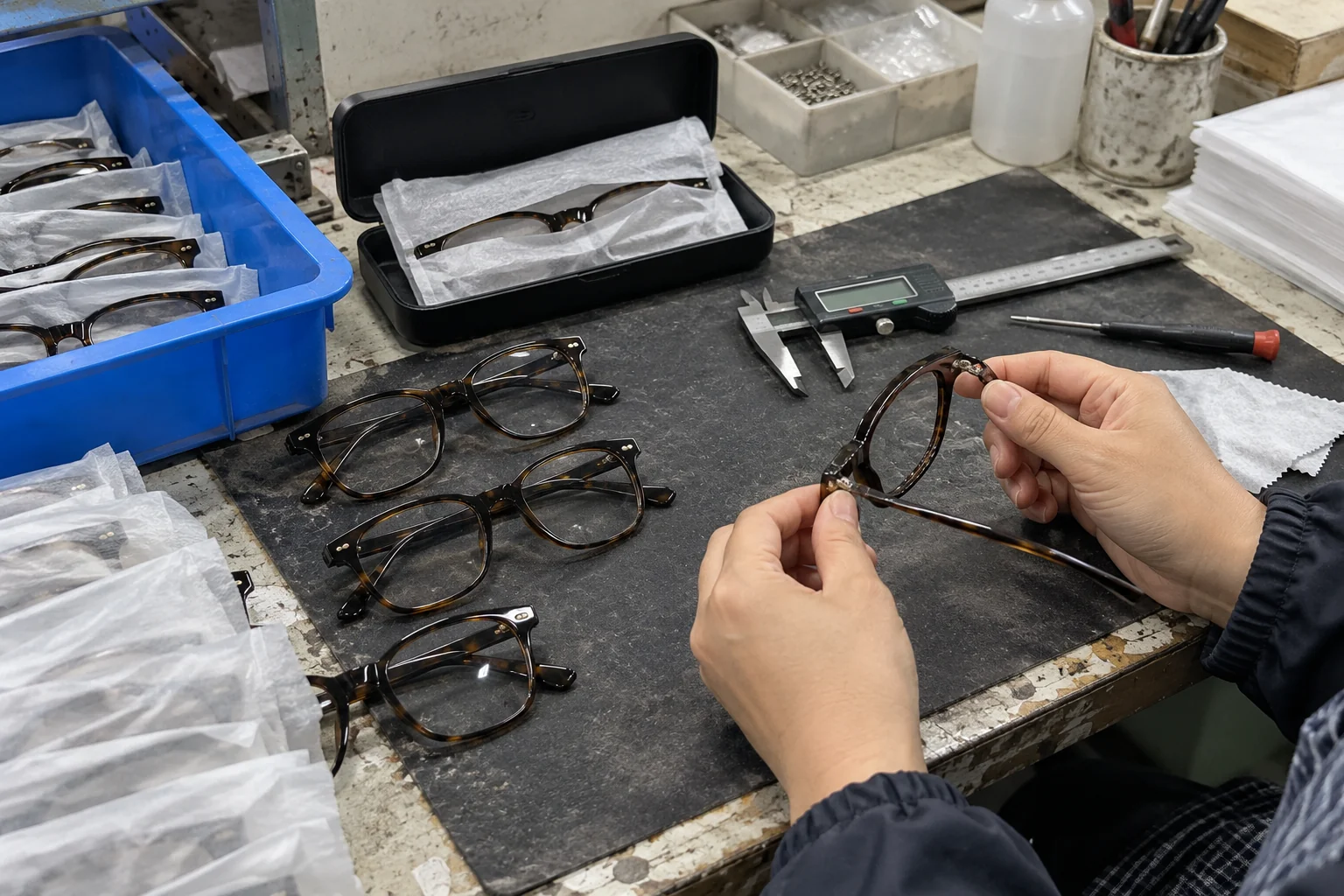
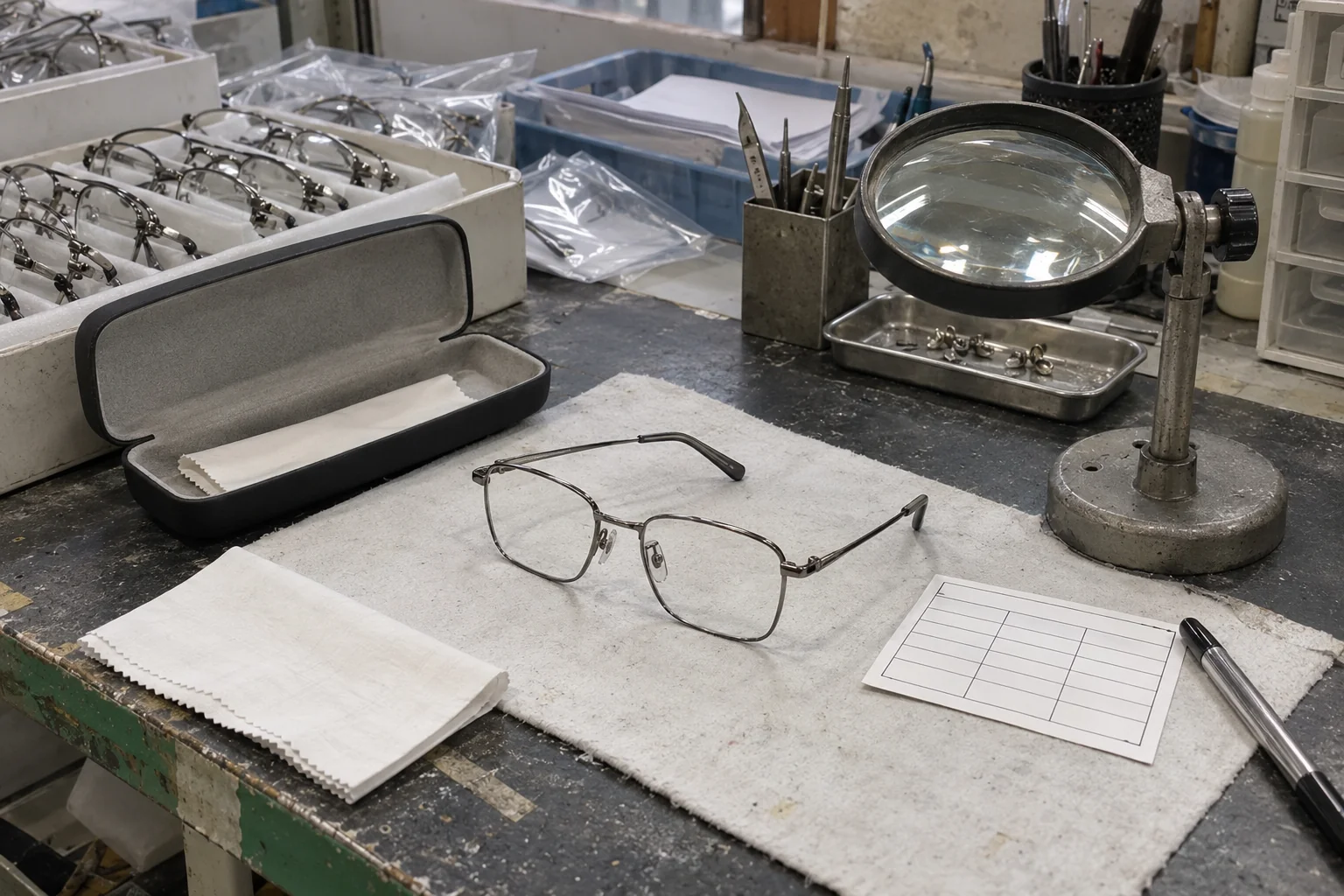
Alignment, inspection & packing
The assembled frame is adjusted, checked, cleaned and packed.
Quality focus
Review dimensions, alignment, surfaces, movement, markings and the specified packaging.
PROCESS OVERVIEW
Metal frame process
Component forming, joining, surface finishing and assembly.
01
Components & front forming
Metal components and rim profiles are prepared for the selected construction.
Quality focus
Cutting, forming or decorative component processes are chosen to suit the design; not every model uses the same method.
02
Component machining
Connection areas, bridge parts and temple features are prepared for assembly.
Quality focus
Dimensions and connection geometry follow the chosen frame construction.
03
Joining & assembly
Rims, bridge, hinges and other specified parts are joined.
Quality focus
The joining method depends on the material and part. Position, symmetry and joint appearance are review points.
04
Polishing & tumbling
Edges, joints and surfaces are refined before the specified finish.
Quality focus
The surface is checked before coating or further decoration.
05
Surface finish & decoration
Plating, colour finishing or decorative marking is applied where specified.
Quality focus
Finish type and colour require model-specific confirmation; no coating or test performance is implied.
06
Pads, tips & lens fitting
Specified nose pads, temple tips and lenses are fitted.
Quality focus
Component orientation, seating and lens fit are checked against the agreed specification.
07
Branding & adjustment
Markings are added and the assembled frame is adjusted.
Quality focus
Review logo placement, legibility, temple movement and frame alignment.
08
Final inspection & packing
The finished frame is inspected, cleaned and packed for the order.
Quality focus
Review visible finish, dimensions, assembly and packaging against the agreed approval criteria.
General process illustration. This diagram does not depict a Smartreach factory or certify a production capability. The applicable process is confirmed for your selected project.
Compare the front shape, dimensions, colour, visible surfaces and decorative details. Review alignment and temple opening. Record each requested change by model and colour, with an annotated photograph when useful.
Logo, lenses & packaging
Check artwork, placement, orientation and legibility. Review lenses or clips where included, and check the agreed case, labels and packaging. Appearance alone does not establish lens performance or compliance.
Approval & order readiness
Confirm whether changes need another sample. Before proceeding, agree the final specification, quantity by model and colour, price, payment terms, required documentation, timetable and shipping arrangements in writing.
A practical enquiry checklist.
Model / category · Colour reference · Quantity per colour · Target market · Logo and packaging · Requested design changes · Sample needs · Delivery destination and target date.
You can start with the details you already know. Our team can discuss the remaining questions for your selected project.
Include the model numbers, preferred colours, quantities per model and colour, target market and required date. Add your logo artwork or packaging references if branding is part of the project.
How do private label and OEM / ODM projects differ?
A private-label enquiry starts with an existing frame and your branding requirements. An OEM / ODM brief can include changes to colour, dimensions or construction, or an original design direction. The scope and feasibility are reviewed for the selected project.
What needs to be agreed before a sample?
Confirm the selected frame, material, dimensions, colour references, logo placement and any changes. Agree sample costs, timing and the points you will review before proceeding.
Can I order every catalogue model from stock?
Catalogue inclusion does not confirm stock. Send a shortlist and quantities so our team can check current availability, branding options and preparation arrangements.
Which lens or market requirements should I include?
Tell us your destination market and intended lens requirements. Request the applicable specifications and any required supporting documents for the selected product before ordering.
How are minimum quantities and delivery dates set?
Request confirmation for the specific model, colours, quantities and development scope. Sample timing, production arrangements and shipping should be agreed as part of that enquiry.